X3D Turbo Mode 2.0: Platform-Level Performance Tuning for AMD X3D Processors
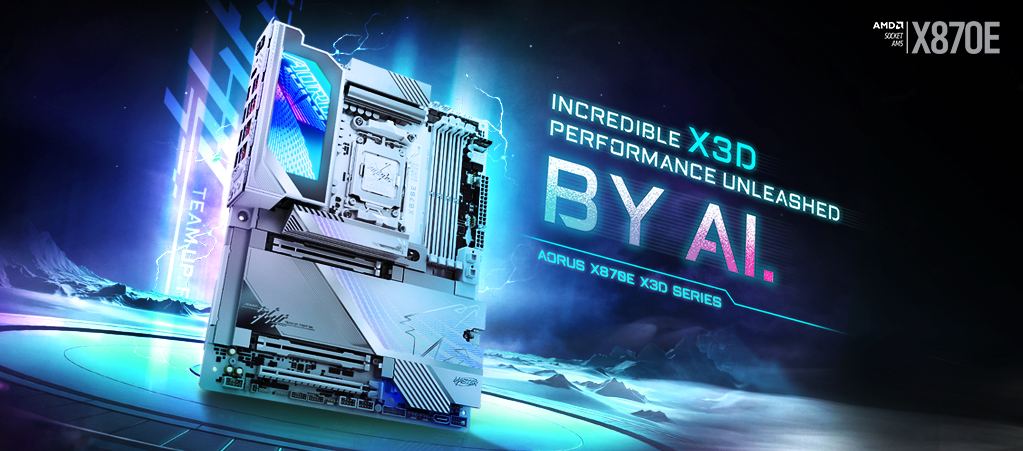
Why the Best Gaming CPU Is Also the Hardest to Tune
AMD X3D processors changed how gaming performance behaves.
Their 3D V-Cache design keeps more data closer to the cores, which is why X3D systems often feel smoother and more consistent in real gameplay—even when clock speeds look lower on paper.
But that advantage comes with a trade-off.
X3D processors don't behave like conventional CPUs. Voltage headroom is tighter, thermals ramp faster, and pushing frequency the usual way often leads to diminishing returns—or unstable performance instead of real gains.
In other words, the same design that makes X3D exceptional also makes traditional tuning methods ineffective.
That creates a new challenge:
How do you unlock more performance from a processor that isn't meant to be pushed harder, but smarter?
The answer no longer lives at the CPU level alone.
Rethinking Performance: From CPU-Centric to Platform-Level
For years, performance tuning focused almost entirely on the processor itself.
Raise clocks. Add voltage. Improve cooling.
X3D changes that equation.
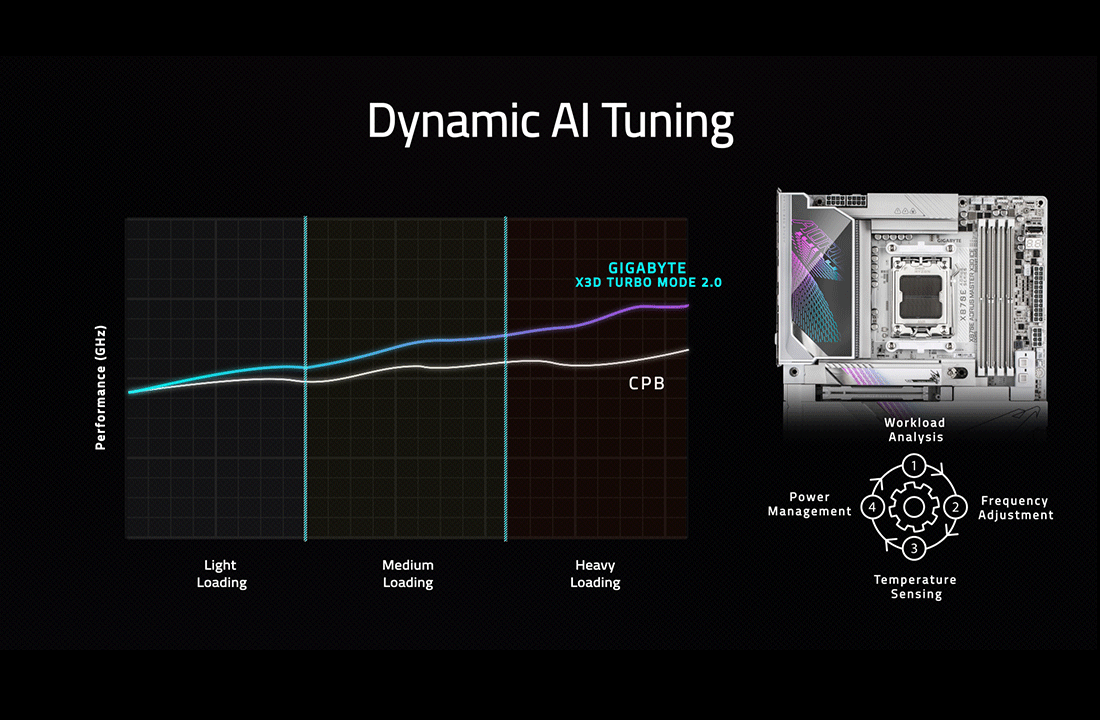
With X3D processors, performance stops being a CPU-only problem. Memory behavior, power delivery, and how the motherboard dynamically reacts to changing workloads start to matter just as much as the processor itself. Fine-grained platform coordination becomes more important than raw frequency increases.
This shift in thinking is the foundation behind X3D Turbo Mode 2.0.
What Is X3D Turbo Mode 2.0?
X3D Turbo Mode 2.0 is a platform-level performance mode developed by GIGABYTE specifically for AMD X3D processors.
Rather than attempting to override the physical limits of X3D CPUs, X3D Turbo Mode 2.0 aligns platform behavior with how X3D architecture actually works. Instead of forcing higher clocks, it changes how the system responds when workloads shift—how power is delivered, how memory behaves, and how quickly the platform adapts under load.
This is not traditional overclocking.
It's performance through platform intelligence.
.jpg)
How X3D Turbo Mode 2.0 Works
X3D Turbo Mode 2.0 is built on a hardware–software co-design approach, combining real-time monitoring with adaptive platform control.
Dedicated onboard hardware chip
A dedicated controller on the motherboard continuously monitors platform conditions and workload behavior in real time. Because it operates independently from the operating system, it can react immediately—without waiting for software layers to catch up—maintaining stability even as workloads fluctuate.
Exclusive Dynamic OC Engine model
At the core of X3D Turbo Mode 2.0 is GIGABYTE’s exclusive Dynamic OC Engine model. Trained using extensive X3D processor datasets, the model recognizes real-world workload patterns and dynamically adjusts platform behavior based on how systems are actually used, not synthetic assumptions.
Together, these elements allow the system to sustain higher effective performance during gaming, content creation, and heavy workloads—while staying within safe operating limits.

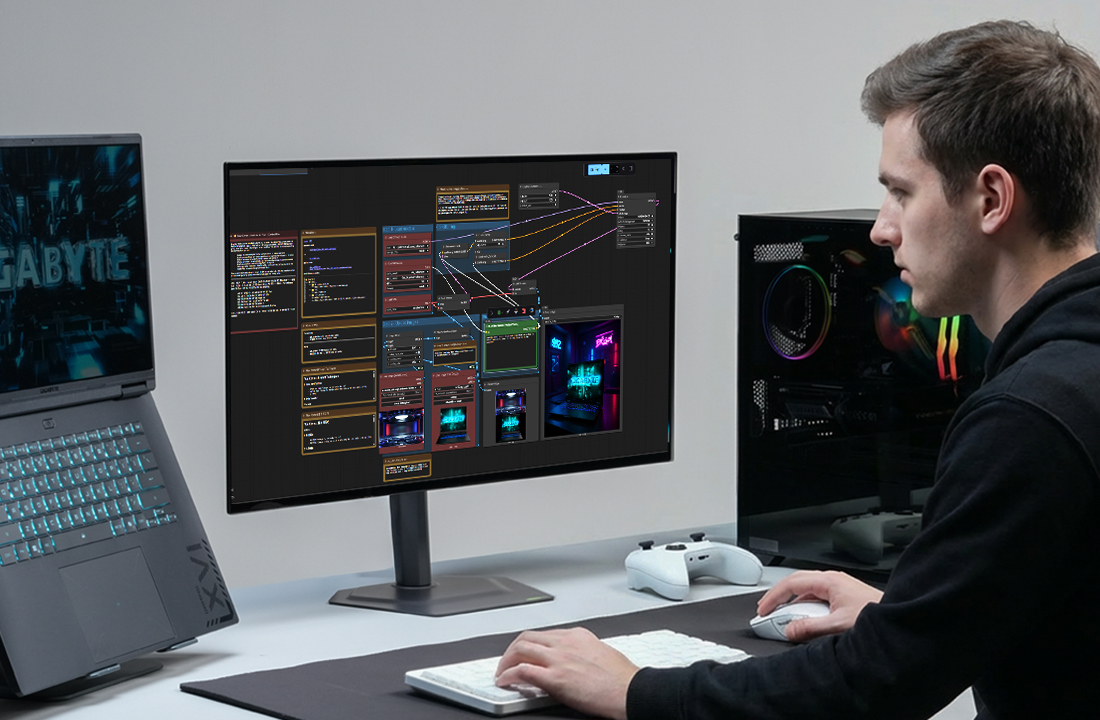
Performance That Adapts to How You Use Your System
X3D Turbo Mode 2.0 doesn't assume every workload should be treated the same.
Instead, it offers three selectable modes designed around real-world usage scenarios:
-
Standard – Stable, default system behavior for everyday use. Set it and forget it.
-
Max Performance – Balanced performance for gaming and multi-core workloads such as rendering and content creation.
-
Extreme Gaming – Focused on maximizing in-game frame rates and frame-time consistency, ideal for FPS-sensitive and competitive gaming scenarios.
This flexibility allows users to choose the mode that best fits what they’re doing, rather than relying on a one-size-fits-all setting.
Real-World Performance Gains
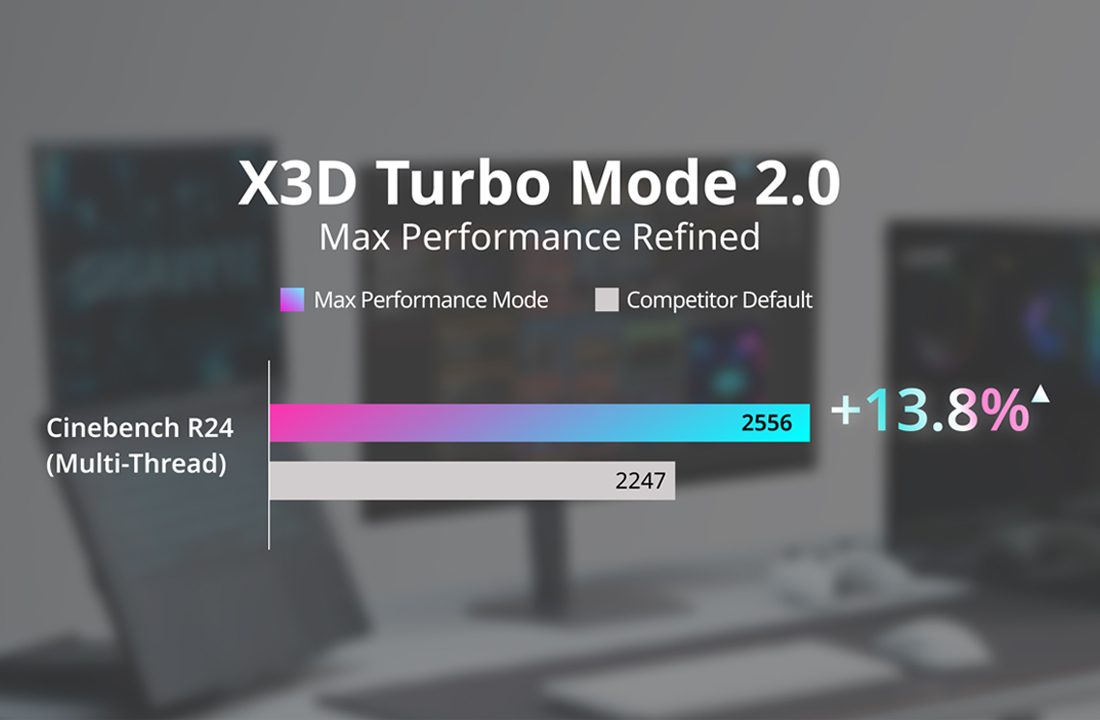
Under heavy multi-core workloads, Max Performance mode delivers up to 13.76% higher performance in Cinebench multi-core testing compared to a competitor’s default configuration—demonstrating the impact of coordinated platform-level tuning.
For gaming, Extreme Gaming mode prioritizes frame-time consistency, resulting in higher average FPS and improved 1% low performance compared to the first-generation X3D Turbo Mode. The difference isn’t just higher peak numbers—frame delivery stays tighter when scenes get chaotic, which is what players actually notice.
Platform-Level by Design
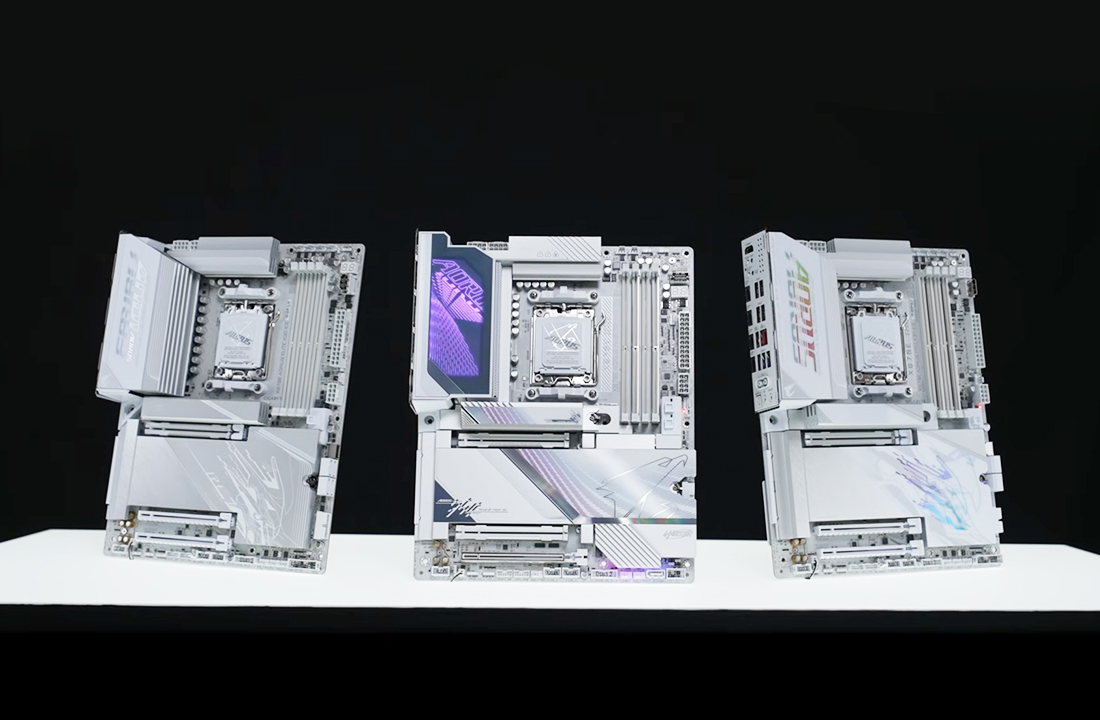
X3D Turbo Mode 2.0 is supported exclusively on GIGABYTE X3D-series motherboards, with Day-0 support for the latest AMD X3D processors.
This tight integration ensures performance tuning is designed into the platform from the start—not added later as an afterthought.
Conclusion: Performance Is No Longer About Pushing Harder
X3D Turbo Mode 2.0 represents a more deliberate approach to performance, built around the real behavior of X3D architecture.
By combining a dedicated onboard hardware controller, optimized power delivery design, and an exclusive Dynamic OC Engine model, GIGABYTE enables X3D processors to operate more effectively across both gaming and heavy workloads—delivering more of what X3D is designed to do best.
X3D shows that performance isn't about pushing harder anymore.
It's about how well the platform supports the processor—and that puts the motherboard back at the center of the performance conversation.